
MESSAGING: Secure Messaging
What is Messages 2.0?
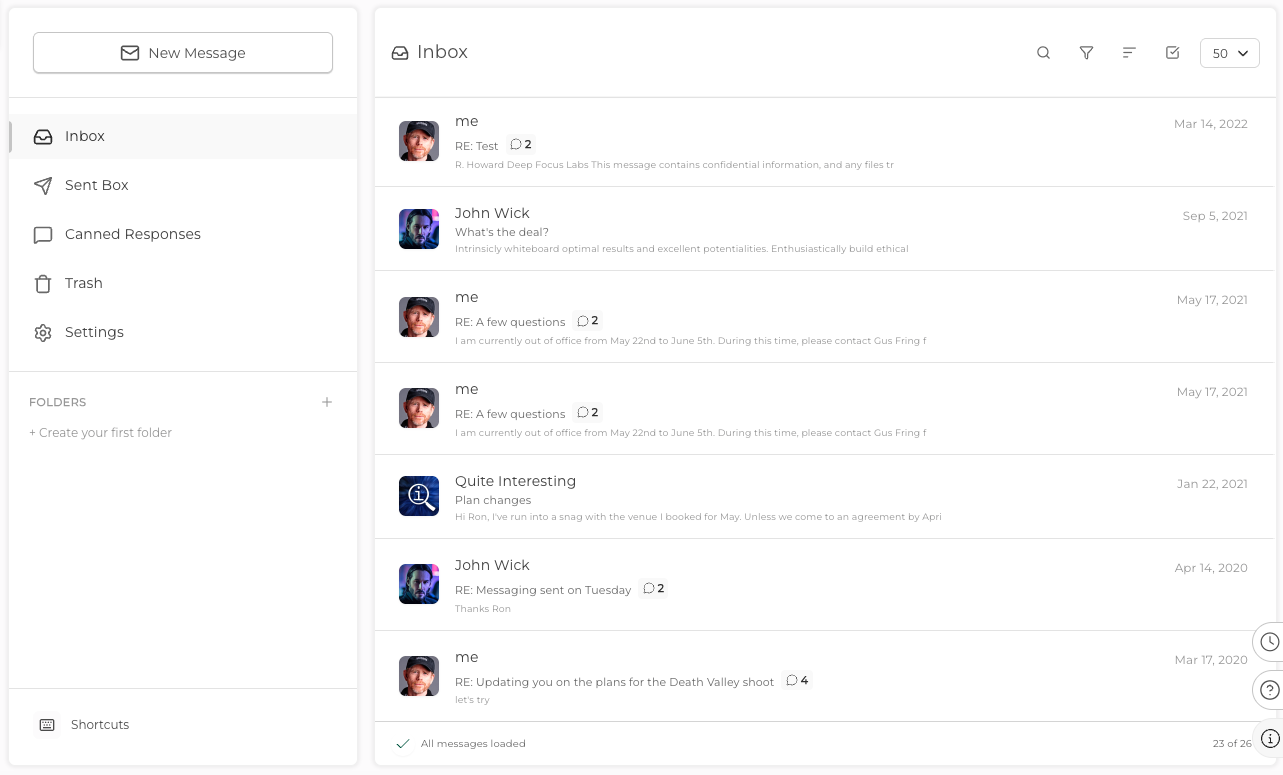
Messages 2.0 is a complete redesign of the internal messaging system, built on conversation Threads instead of single, disconnected messages. Every reply between you and a Contact, Staff member, or Team is grouped under one Thread, so you can see the full back and forth at a glance from your Inbox, Sent Box, Trash, or any custom Folder you create.
The new experience includes a fresh sidebar layout, intelligent date display, pinning, Folders, hover and bulk actions, an updated Compose modal, Canned Responses, Read Receipts, and a fully responsive mobile view. Performance has also been overhauled so that even mailboxes with tens of thousands of conversations open quickly.
TIP: All existing messages are preserved and automatically grouped into Threads. Nothing is lost. The first time you open Messages after the update, your inbox simply reorganizes itself by conversation.
How do I access Messages 2.0?
Navigate to Messages from your main left navigation. The new Messaging Page opens with a left sidebar and a content area on the right.
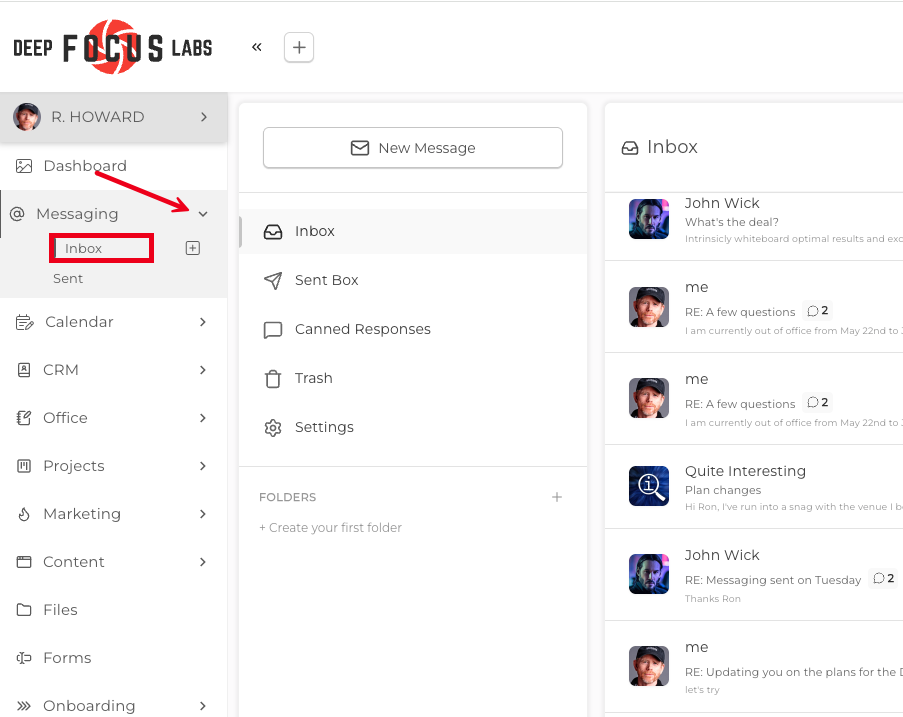
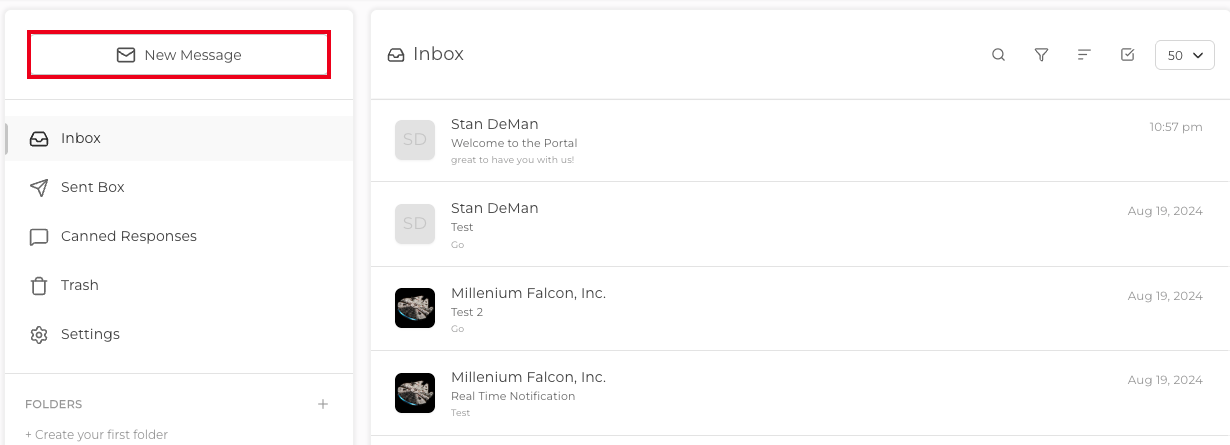
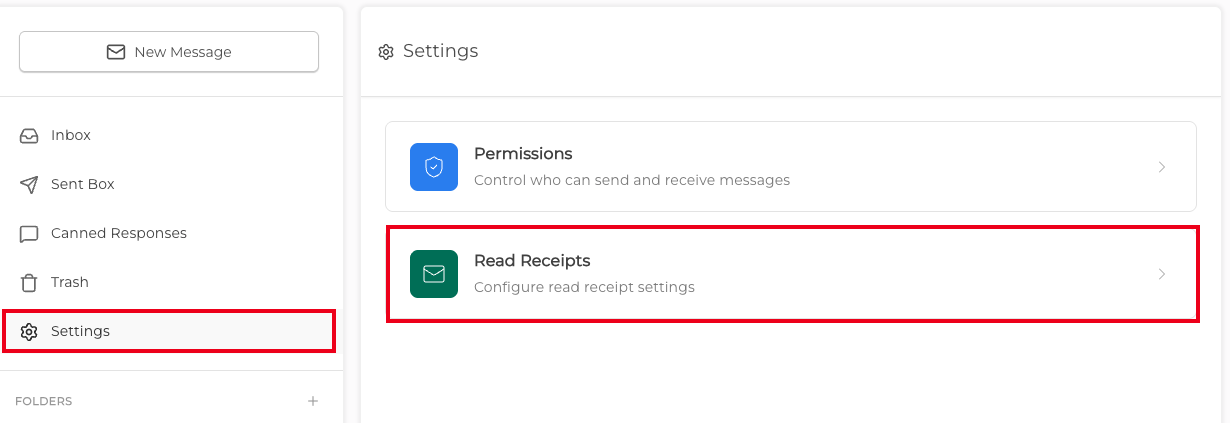
The left sidebar contains the New Message button at the top, followed by navigation to Inbox (with an unread count badge), Sent, Canned Responses, Trash, Settings, and any custom Folders you have created. The currently active section is highlighted with a teal indicator on the left edge.
How does the Inbox work?
The Inbox now lists Threads, not individual messages. Each Thread card shows the sender of the most recent message, a preview of that message, the timestamp, an unread indicator, a reply count, and an attachment icon when files are present.
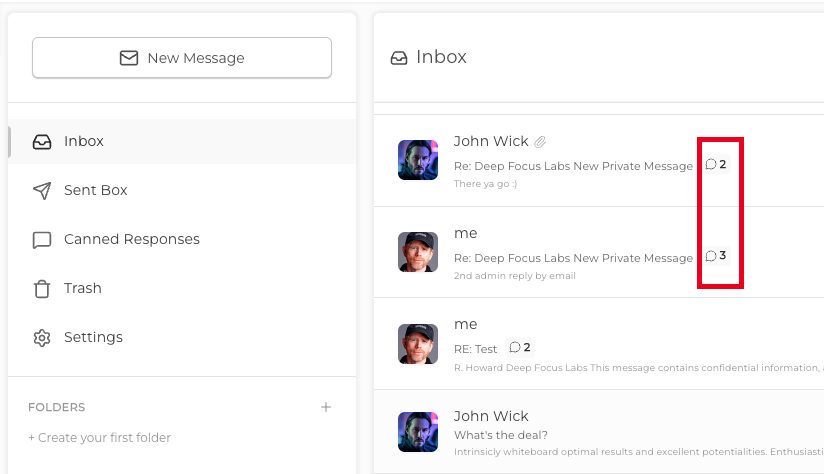
Threads are ordered with Pinned Threads always at the top, then sorted by the date of the most recent activity (newest first). Unread Threads are visually highlighted but stay in their date position, so the list never reshuffles when you read a message.
Filters
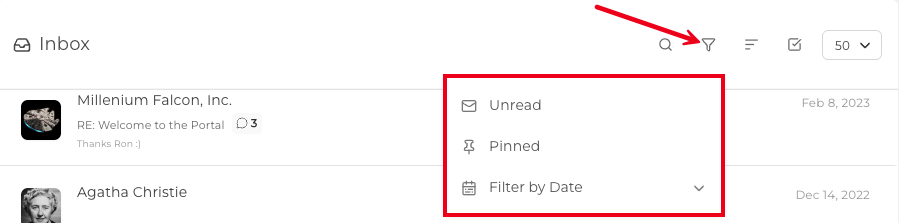
Use the filter icon above the list to narrow what you see:
- All: Every Thread in the current view.
- Unread: Only Threads that contain at least one message you have not opened.
- Pinned: Only Threads you have pinned.
- Filter by Date: Limit results to messages received within a specific date window.
Sorting
 Sort the list using the sort dropdown:
- Created (Newest - Oldest): Most recent activity first (default).
- Created (Oldest - Newest): Oldest activity first.
- Subject (A to Z): Alphabetical by subject.
- Subject (Z to A): Reverse alphabetical by subject.
Hover Actions (Desktop)

Hover over any Thread to reveal quick actions on the right side of the card: Pin, Mark Read or Unread, Reply, Reply All (when more than one recipient is involved), and Move to Trash.
Bulk Actions
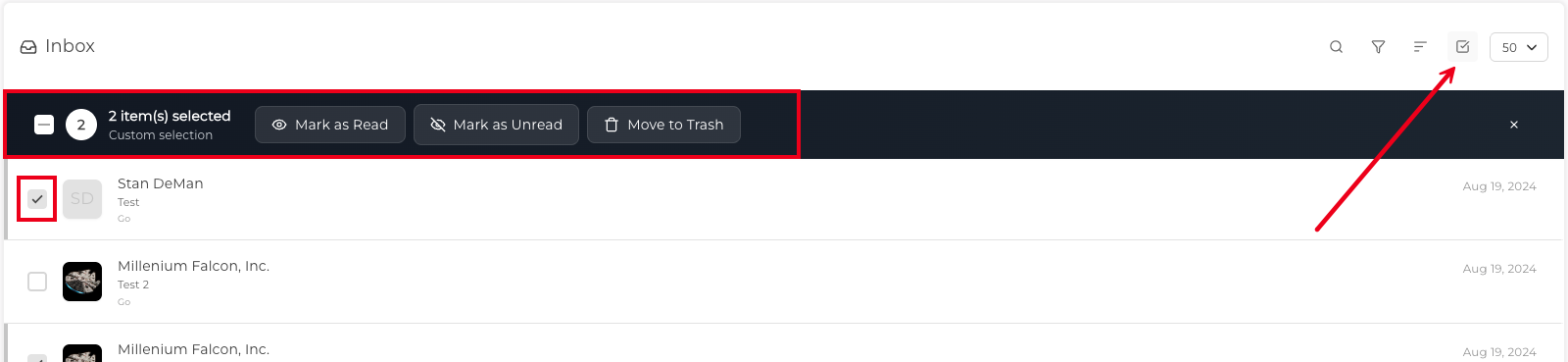
Select multiple Threads using the checkboxes on the left of each card. A bulk action bar appears with options to Mark as Read or Unread and Move to Trash.
How does the intelligent date display work?
Timestamps automatically adapt to keep the list readable at a glance:
- Messages from today show only the time, for example 10:42 AM.
- Messages from yesterday show Yesterday.
- Messages from earlier this week show the weekday name, for example Monday.
- Messages from earlier this year show month and day, for example Dec 9.
- Older messages show month, day, and year, for example Dec 9, 2023.
TIP: Times respect each user's own time zone and time format settings. A message sent at 1:48 PM in your zone will not show up as 10:48 to another user.
How do I open and read a Thread?
Click any Thread card in the list to open the Thread View. The full conversation displays in chronological order, oldest at the top and newest at the bottom, with day dividers labeled Today, Yesterday, or the date.
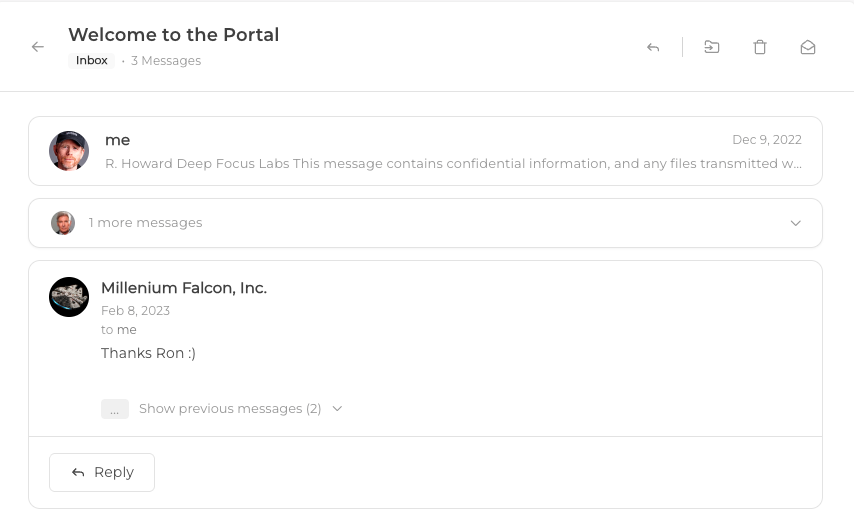
Older messages display with slightly reduced opacity, while the latest message is prominent so you can find the newest content immediately. Older messages can be collapsed to keep long Threads readable, and any message can be re-expanded with a click. Each message card displays the sender, the date, attachments if any, and on hover, quick Reply and Share actions per message.
A sticky action bar at the bottom of the Thread offers Reply, Reply All, and Delete. The Reply All option only appears when the most recent message went to more than one recipient.
Attachments Panel
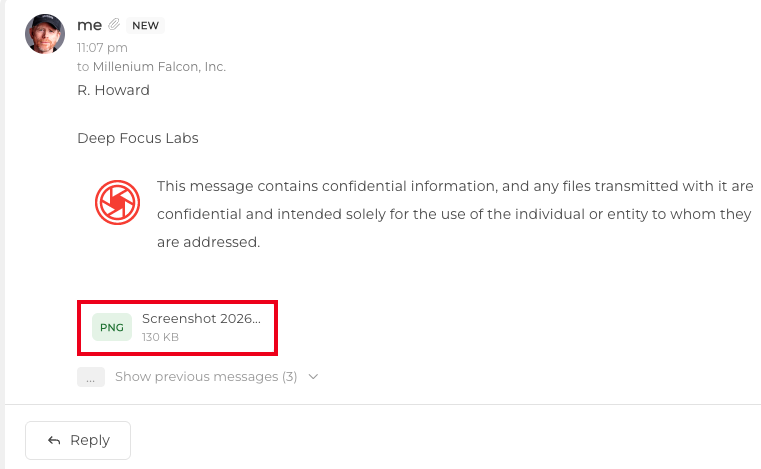
Files shared in the Thread are accessible via the attachments panel. Each file is shown with a color-coded icon (PDF red, DOC blue, XLS green, images purple, ZIP orange, TXT gray), file name, size, the user who uploaded it, and the date. Hover any file for a tooltip with the full filename.
How do I compose a new message?
Click the New Message button at the top of the sidebar. A modal Compose dialog slides up from the bottom of the screen.
Fill in the following fields:
- To: Start typing a Contact, Staff member, Team, or Circle name. Each recipient appears as a removable chip in the field.
- + Add CC: Click to reveal an optional CC field with the same chip behavior as To. Recipients chosen in one field will appear disabled in the other to prevent duplicates.
- Subject: A short title for the conversation.
- Body: Use the rich text editor with Bold, Italic, Underline, Image, and Emoji options.
- Attach Files: Click the paperclip area to expand a drop zone for uploads.
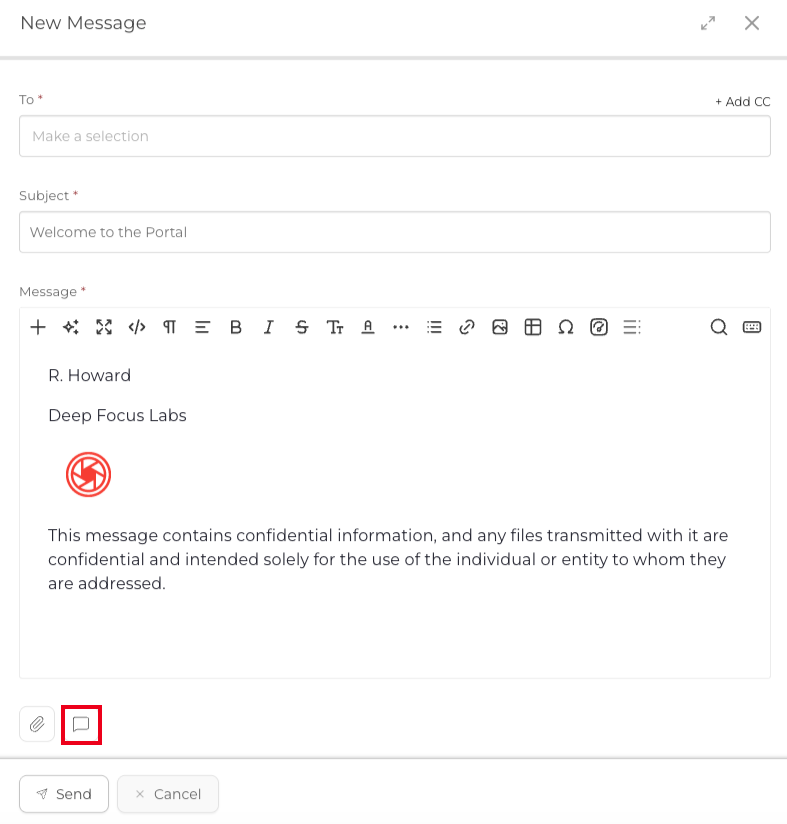
- Canned Response: Click the canned response icon to insert a saved template at your current cursor position.
- Read Receipt: Toggle this on to be notified when recipients open the message (subject to your Read Receipts setting).
Click Send when you are ready. The new Thread appears in your Sent Box and in each recipient's Inbox.
TIP: The Compose modal can be expanded to a larger view via the expand icon in the top right corner of the modal, useful for longer messages.
How do I reply to a Thread?
Open any Thread, then click Reply or Reply All from the sticky bar at the bottom, or use the hover action on any individual message card to reply to that message specifically. The Compose modal opens prefilled with the recipients and subject.
 In Reply mode the subject is shown inline as static text (for example, Subject: RE: Project Update) instead of an editable input, to keep the focus on the body. On hover, a small Edit link appears in teal. Click it to expose the full subject field, and click Hide to collapse it again.
If the subject of a reply differs from the Thread's original subject, the changed subject is displayed in amber in the Thread view to make the shift in topic obvious.
TIP: Click Show original message inside the Reply modal to expand a quoted preview of the prior conversation. You only ever see the messages you were actually a participant on, so adding a new recipient mid Thread never leaks earlier history.
How does the Sent Box work?
The Sent page mirrors the Inbox layout, but each Thread card shows To: the first recipient instead of the sender. There is no unread highlighting (you have already seen your own messages) and no Unread filter.
Hover actions on a Sent Thread are Pin or Unpin and Move to Trash. Bulk actions are limited to Move to Trash.

How does Trash work?
Trashed Threads appear in the Trash section with reduced opacity styling so they read as inactive at a glance. A banner at the top of the page reminds you that messages in Trash are permanently deleted after 30 days.
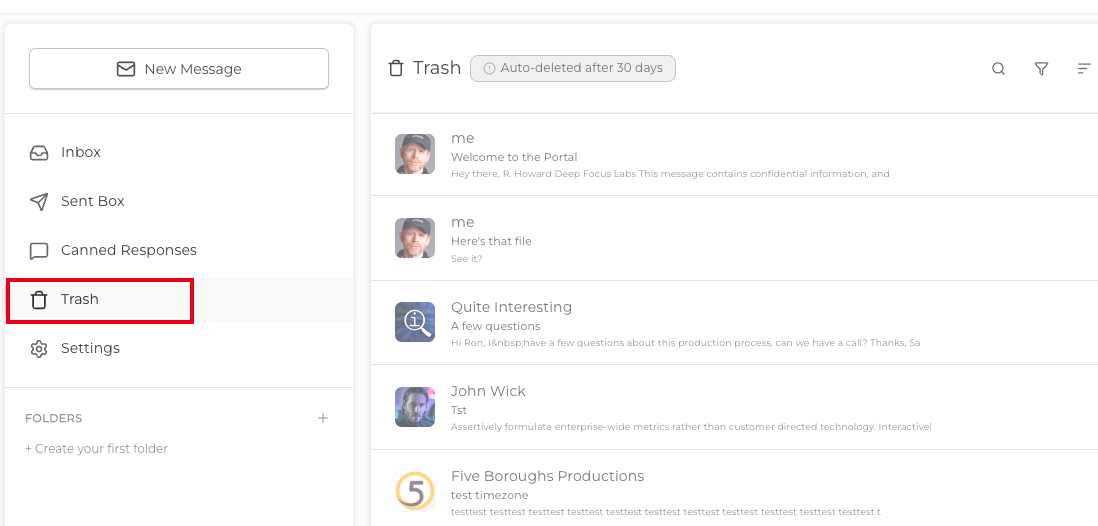
Hover actions in Trash are Restore, and Delete Forever.

Bulk actions in Trash are Restore, and Delete Forever.
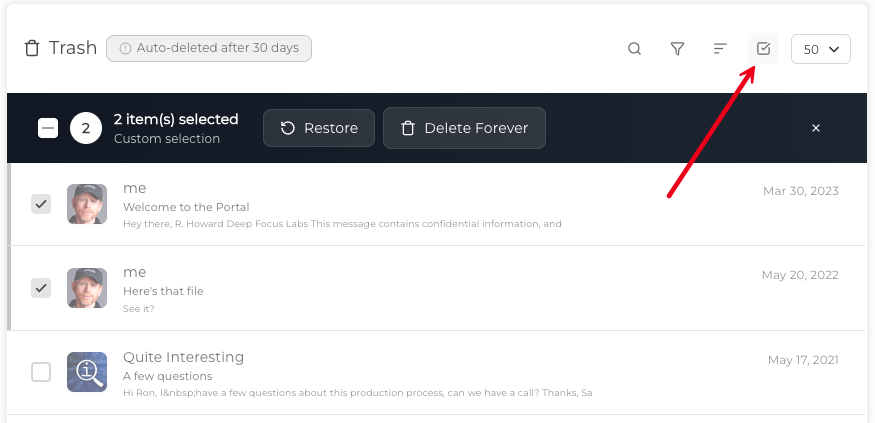
The Unread filter is hidden in Trash since unread state is not relevant there.
IMPORTANT: Delete Forever is irreversible. Once permanently deleted, a Thread cannot be recovered. Use Restore if there is any chance you may want the conversation back later.
How do I pin a Thread?
Hover any Thread card and click the Pin icon. Pinned Threads jump to the top of the current list and remain there regardless of their last activity date, sorted with the most recently active pinned Thread first. Click the pin icon again to Unpin.
Pinning is per user, not per Thread. Pinning a Thread for yourself does not change how it appears for any other participant.
How do I use Folders to organize Threads?
Folders let you group Threads into custom categories such as "Clients", "Internal", "Projects", or any label that fits your workflow. They appear in a dedicated section in the sidebar below the main navigation.
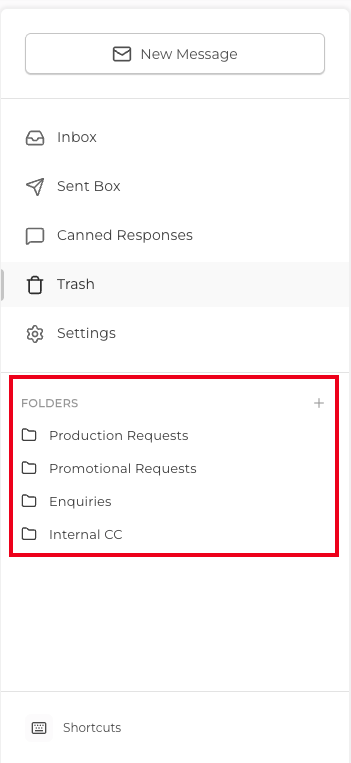
Create a Folder
Click the + button next to the Folders heading in the sidebar. An inline input appears. Type the folder name and press Enter to create it. Folder names must be unique within your account and between 1 and 60 characters.
Rename or Delete a Folder
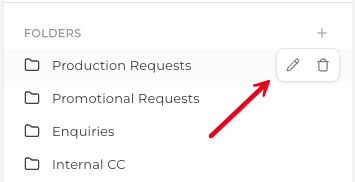
Hover any folder name in the sidebar to reveal the rename and delete icons. Renaming uses the same inline input pattern as creation. Deleting a folder does not delete the Threads inside it. Those Threads simply return to the Inbox.
Move a Thread into a Folder
Open a Thread (or hover one in the list), use the options menu, and choose Assign to Folder.
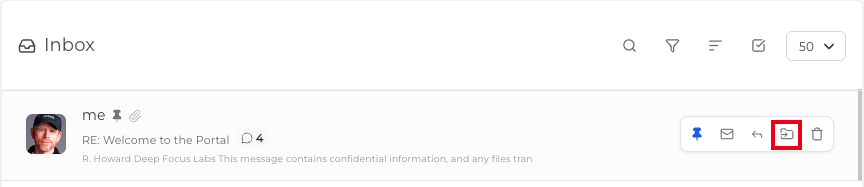
Pick the target folder from the dropdown. The Thread now appears in that folder's list and is removed from Inbox.
To return a Thread to the Inbox, choose Remove from Folder from the same options menu.
TIP: Folder unread counts appear next to each folder name in the sidebar and stay live as you read, move, or receive messages, so you always know which folder has new activity.
How do I use Canned Responses?
Canned Responses are reusable message templates you can insert into any new message or reply with one click. They live under the Canned Responses page in the sidebar.
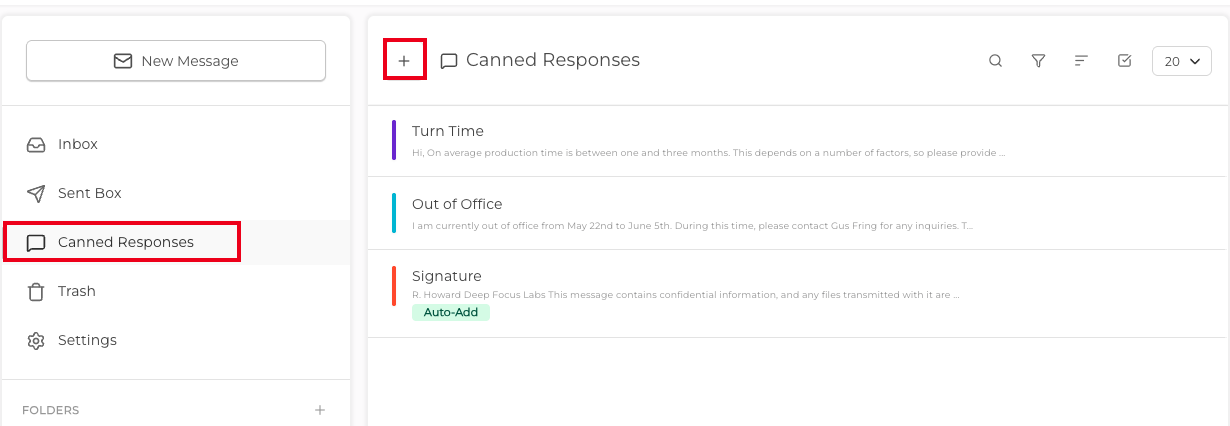
Create a Canned Response
Click + New Canned Response. A tombstone editor slides up with a Title field, an optional Subject line, the rich text body, and two switches:
- Auto-Add: Automatically insert this response when composing a new message.
- Auto-Reply: Automatically send this response as a reply when a new message arrives in your Inbox.
Click Save to add it to your library.
Insert a Canned Response while composing
In any New Message or Reply modal, click the Canned Responses icon in the editor toolbar. A searchable list opens. Click any response to insert it at your current cursor position.
TIP: Canned Responses insert at your last cursor position inside the editor, even if you clicked away to the Subject or CC field first. Any text you already typed is preserved.
What can I configure in Settings?
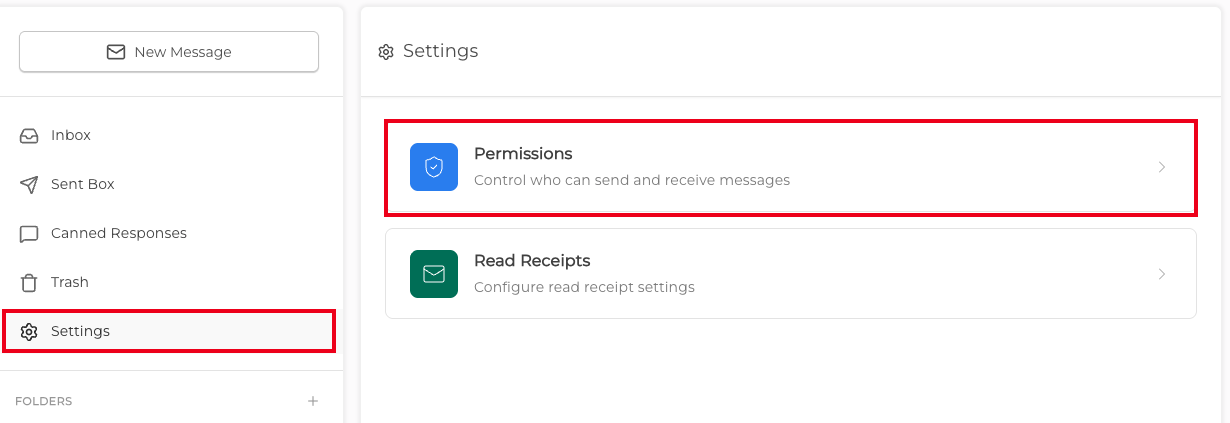
Open Settings from the sidebar to access messaging preferences.
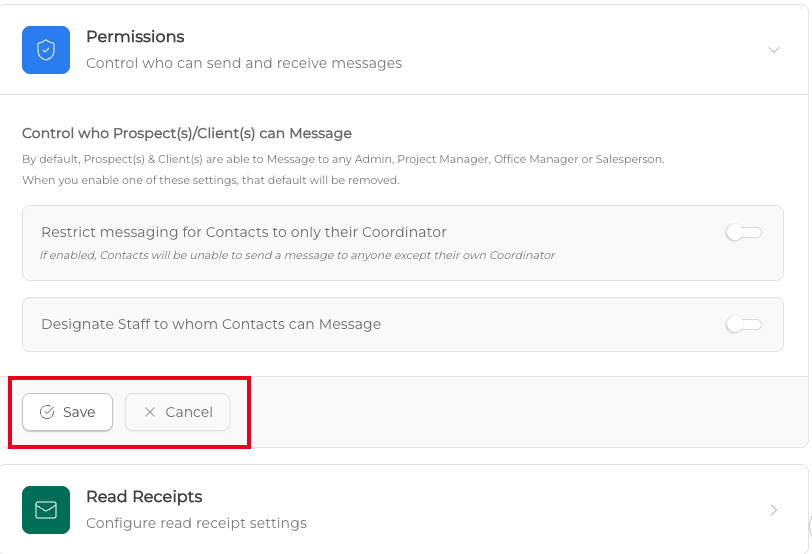
Permissions
Control who you can message and who can message you. Options include Staff, Contacts, Teams, and Circles. When you open this section, the Read Receipts section collapses to keep the page focused.
Read Receipts
Choose whether to allow Read Receipts on messages you send and whether to send them on messages you receive. When this section is opened, Permissions collapses automatically.
Each section uses a Save button followed by a Cancel button side by side, so the primary action is always on the left.
How do I use keyboard shortcuts?
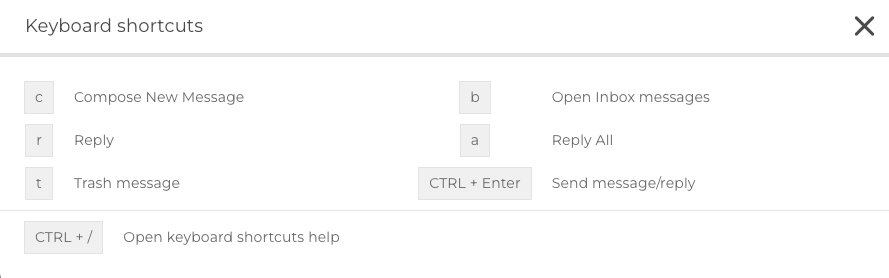
Messages 2.0 includes keyboard shortcuts for common actions. Click the Shortcuts button in the sidebar (or hover the icon) to see the full list of available key combinations for actions like composing a new message, replying, moving to Trash, navigating Threads, and more.
How does Messages 2.0 work on mobile?
On mobile, the sidebar collapses out of view and the navigation moves into a dropdown in the page header. The New Message button becomes a floating action button (FAB) in the bottom right of the screen. On the Canned Responses page, the FAB switches to + New Canned Response.
Thread cards on mobile use a card style with rounded corners, shadows, and an always-visible inline action row at the bottom of each card replacing the desktop hover menu and 3-dots. Reply count and attachment icons move into that bottom row to make room for the sender and subject.
Inside a Thread view on mobile, the header splits into two rows: the subject and back button on top, and the action buttons plus the message count badge on the bottom row. Reply bar button labels collapse to icons to save horizontal space.
What happens to messages in Trash after 30 days?
Threads in Trash are permanently deleted automatically 30 days after they were moved to Trash, via a daily cleanup job. The banner at the top of the Trash page is a reminder of this retention window.
IMPORTANT: If you want to keep a Thread indefinitely, do not leave it in Trash. Restore it to your Inbox or assign it to a Folder before the 30-day window expires. Once permanently deleted, the Thread cannot be recovered, even by Support.