
OFFICE: Recurring Generators
What is a Recurring Invoice Generator?
A Recurring Invoice Generator lets you automatically generate Invoices on a schedule and frequency that you specify. These Generators you will directly assign to a single Client or multiple Clients or Circle(s) and each time the generation cycle happens the resulting Invoice will be directly assigned to that one Client or those particular Client(s) or Circle(s). You pre-define the line items, the amounts, the payment options, payment gateways, etc. and each Invoice that is generated will contain the same items/options as were configured in the Recurring Generator.
You can also create a Dynamic Recurring Invoice Generator. Instead of having to create a Recurring Invoice Generator for each Client, you can assign it via Automations or Form Assignments.
IMPORTANT: A Recurring Invoice Generator is not the same as a Subscription Payment. A Recurring Generator continuously generates the Invoice itself for the Client to manually pay.
How do I Create a Recurring Invoice Generator?
To get started navigate to Office > Invoices.

From here, hover your cursor over the Generators tab in the top navigation bar and select Recurring from the dropdown.
Then click the +Add Recurring Generator button.

You'll now have a choice between Dynamic and Direct.
If you are manually assigning this Generator to a particular Client choose Direct. If you are creating a Generator to assign to clients via Automation choose Dynamic.
 Direct Recurring Generator
 Direct Recurring Generator
Creating a Direct Recurring Generator is very similar to creating an Invoice with a few differences.
CLICK HERE to learn more about creating Invoices
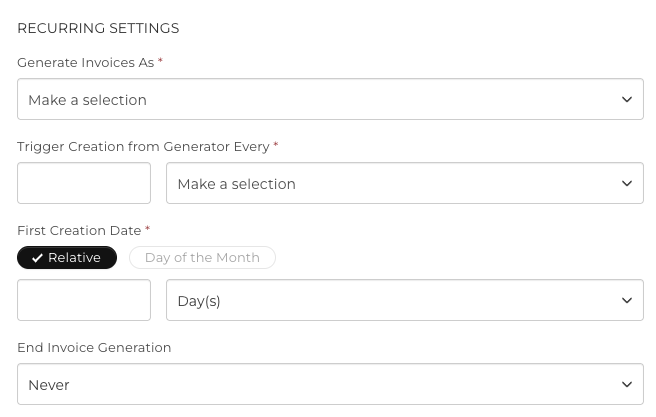
Generate Invoice As: This is what the Invoices that the Recurring Generator produces will be generated as. You can choose Open or Draft from the dropdown menu.
Trigger Creation from Generator Every: You can customize how often the Generator will trigger. The intervals you can choose from are Days, Weeks, Months, and Years.
First Creation Date: Set when you would like the first Invoice to be created.
End Invoice Generation: Set your end condition for the Recurring Generator.
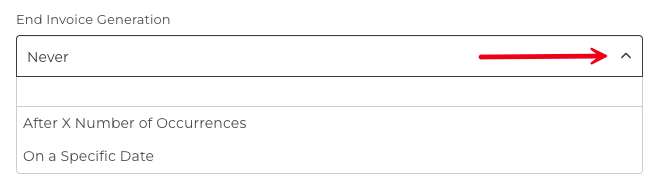
By default, a Recurring Generator will continue producing Invoices indefinitely. You can now set an end condition so the generator automatically stops and marks itself as Completed once the condition is met. This gives you precise control over how long a billing cycle runs without needing to manually intervene.
Never: The generator runs indefinitely until manually paused or deleted.
After X Number of Occurrences: The generator will stop after producing the specified number of Invoices. Enter the total number of Invoices you want generated.
On a Specific Date: The generator will stop after the cron run on or after the date you select. The final Invoice for that date is still generated before the generator is marked Completed.
What happens when the end condition is reached?
When a generator hits its end condition — either the occurrence count is reached or the end date has passed, it is automatically set to Completed status. No further Invoices will be generated.
A Completed generator cannot be resumed. It will remain visible in your generator list but will no longer run.
IMPORTANT: Once you apply a generator to a Client and it reaches Completed status, it cannot be reactivated. If you need it to run again, you will need to create a new instance of the generator.
Payment Settings
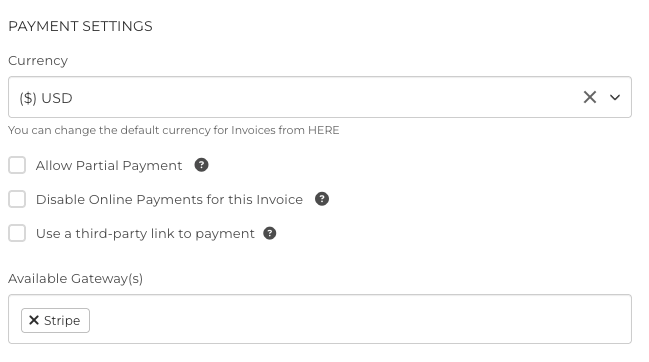
If you choose to set the Generator as Open you will also have the additional option of AutoPay.
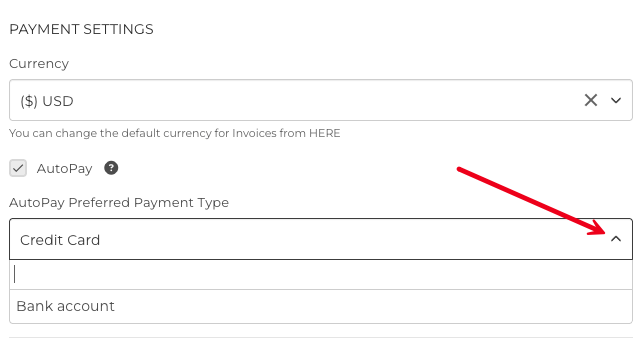
When enabled, invoices generated by the generator will be automatically charged to the client's authorized payment method, no manual action will be required.
CLICK HERE to learn about the Authorized payments/AutoPay.
Assign Automations: Trigger Automations for when the Invoice is Generated and/or when the Invoice is Paid.

Relative Due Date: Upon generation of an Invoice set how many days the Client has until payment is due.

Once you are finished creating your Recurring Generator you can either Save as Open or Save as Draft.
Open: The Recurring Generator will be active and will generate Invoices as configured.
Draft: It will save the creation process for you to complete later and will not generate Invoices.
Dynamic Recurring Generator
Creating a Dynamic Recurring Generator is very similar to creating a Direct Recurring Generator, with two key differences.
You are creating a "framework" that can be applied to different Clients so you don't assign it to a Client. Instead, the assignment will be made via automation. More details are in the following section.
For the First Creation Date instead of specifying a specific date, you can choose between a Relative number of days or a particular day of the month.

How do I assign a Dynamic Recurring Invoice Generator?
There are several ways you can trigger a Dynamic Recurring Invoice Generator for a Client.
CRM Options Menu
You can assign a Recurring Generator via a Client's CRM Options Menu.
Navigate to CRM > Contacts.

Click the Options menu button (3 dots) of the Contact you would like to assign the Generator to and select Recurring Generator.
 A modal will appear in which you can make your selection.

While Creating/Editing a Contact
While creating a new Contact (via manually adding or Kickoff Form), or editing a Contact, you can assign them a Dynamic Recurring Generator in the process.
For manually adding a Contact navigate to CRM > Contacts and click the +Add Contact button.

Select the Recurring Generator you would like to assign from the dropdown menu.
This option will appear once you've set the Contact's Role as a Client.

CLICK HERE to learn about Creating a Contact
To add via a Kickoff Form navigate to Forms and click the +Create Form button. Select Kickoff Form when prompted.

Set the Role of the Contact as a Client.
You can then choose the Recurring Generator from the dropdown menu.

CLICK HERE to learn about Kickoff Forms
Via No-Code Automations
In most areas of the platform, you assign a Dynamic Recurring Generator to a Client using the Recurring Generator Automation.

For example, while creating a Project, you can add this Automation to trigger once the Project is Complete.
CLICK HERE to learn about Automations
How do I manage a Recurring Generator?
Navigate to Office > Invoices > Generators > Recurring and click the Options menu button beside the Recurring Generator that you would like to manage.

Edit: Change any information within the Recurring Generator.
Manage Automations: Click the switcher to set Automations to trigger when the invoice is Generated.

Alternatively, you can also switch to set Automations to trigger when the invoice is Paid.

Duplicate: Make a copy of the Recurring Generator.
Pause: This will stop the generation of new Invoices. You can choose to Resume it any time and will enter a Resume Date when executed.
Delete: This will remove the Recurring Generator from the platform. This action cannot be undone. It is recommended to archive Recurring Generator for record-keeping.
Archive: Make the Recurring Generator Inactive. It will be relocated to Office > Payments > Archive tab. From here you can choose to View, Restore, or Delete.
Each new generated Invoice will be visible to the Client in their Portal under Office > Invoices. They will be able to able to view and pay it just like a normal Invoice
How do I track progress in the Recurring Generators list?
The Recurring Generators list shows additional information beneath each generator's status to help you track end condition progress at a glance:
 After X Number of Occurrences: A counter displays how many Invoices have been generated out of the total, for example 4 out of 10. This updates with each invoice that is generated.
On a Specific Date: The list shows Until [date] so you can see when the generator is scheduled to stop.
Never: No secondary label is shown, it will only show as Active or Completed.
Generators that have reached their end condition display a Completed status and show --- in the Next Creation Date column.
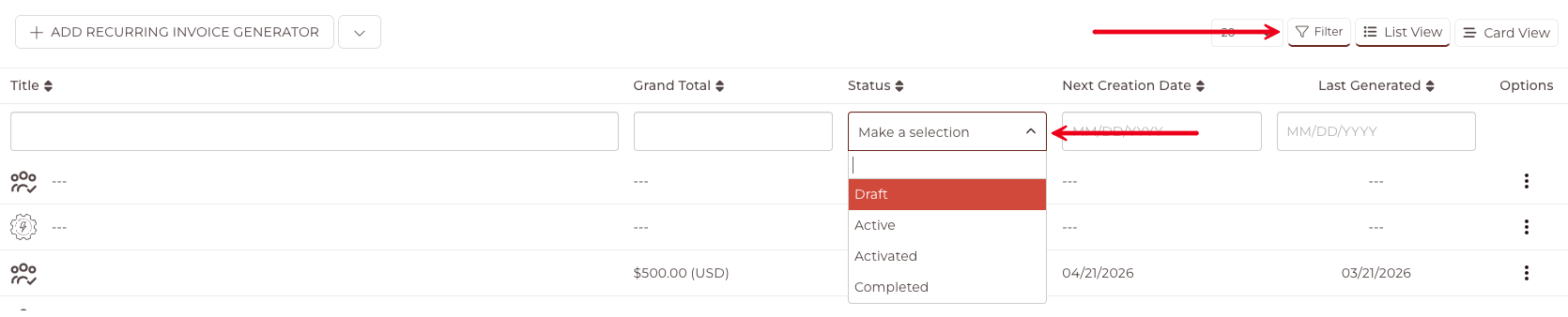
You can filter the list by status Draft/Active/Activated/Completed
Best Practices
Setting end conditions on your Recurring Generators keeps your billing clean and predictable.
- Use After X Occurrences for fixed-term billing arrangements such as payment plans or service packages with a set number of instalments
- Use On a Specific Date when a contract or subscription has a known expiry date, regardless of how many Invoices are generated in that time
- Use Never only for truly ongoing billing with no planned end, such as monthly retainers with no fixed term
- Review the Recurring Generators list regularly and filter by Completed to keep your list tidy and confirm expected generators have stopped as planned
- If you anticipate needing to restart a generator, go to the three dots option menu and select Duplicate. You can then edit your new generator and make the appropriate changed before setting as Active.
TIP: Not sure which option to use? If your Client is on a 12-month payment plan, use After 12 Occurrences. If their contract ends on a specific calendar date, use On a Specific Date. Both approaches ensure billing stops automatically with no manual follow-up required.